Loading...
Serving Opelika, AL and surrounding areas. (334) 704-8271
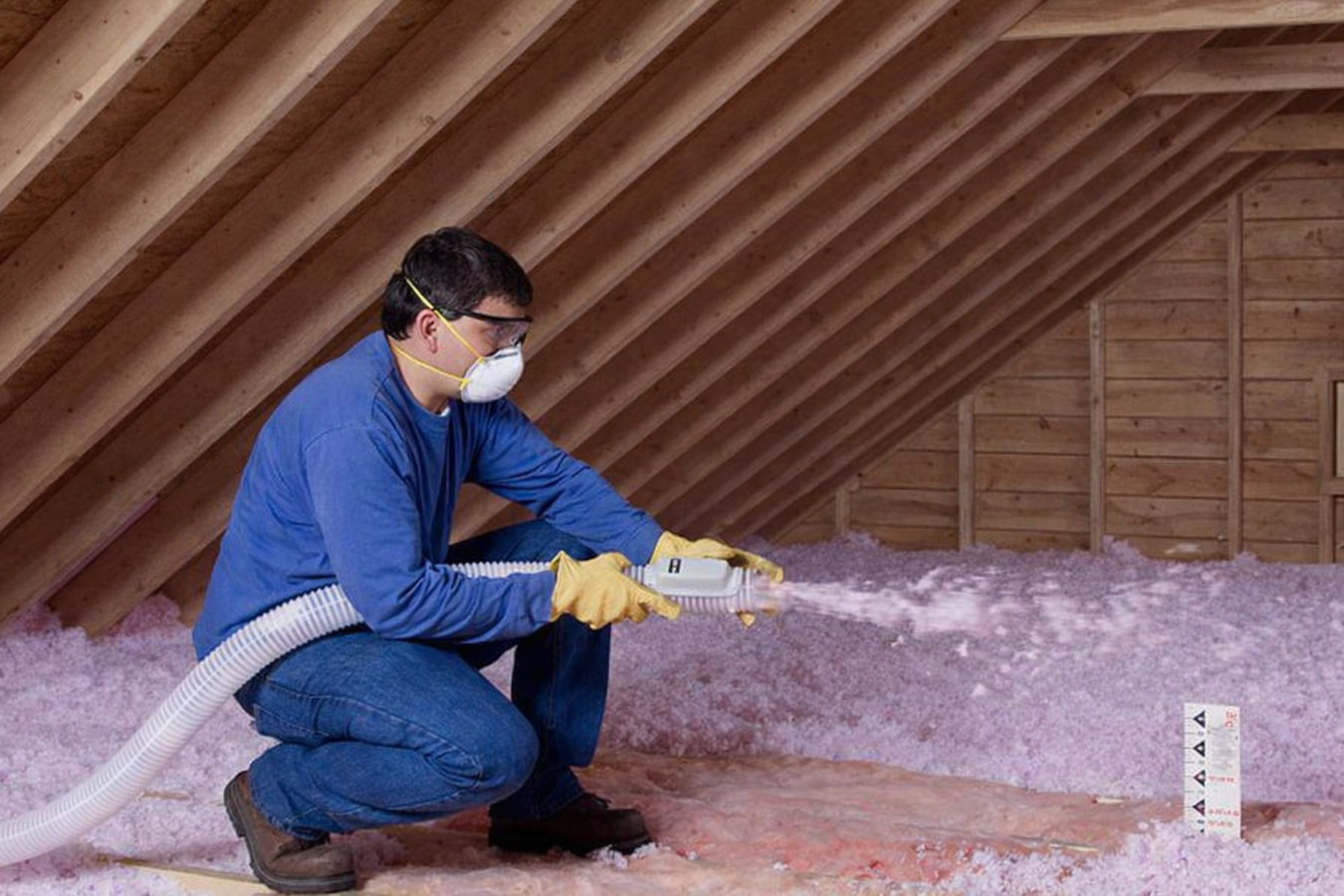
Stop paying for heat you never wanted. Our blown-in insulation fills every corner batt rolls miss, so your attic stops working against your air conditioner.
Blown-in insulation in Opelika uses a machine to fill your attic with loose fiberglass or cellulose material, covering every gap and corner evenly, and most attic jobs for a standard home are finished in one day. Unlike rigid batts, loose-fill flows around obstructions - pipes, wiring, odd-shaped framing - so you end up with a complete thermal barrier rather than a patchwork one.
If your home was built before 1990, the insulation up there was probably installed to standards that look thin by today s measures. Opelika summers push attic temperatures to extremes, and that heat has nowhere to go but through your ceiling. Blown-in insulation is one of the most cost-effective ways to address that problem. If your attic also needs air sealing, pairing the two services gives you the best result - learn more on our attic insulation page.
Federal tax credits currently allow homeowners to claim up to 30% of qualifying insulation costs. Talk to us before scheduling - we make sure you have the paperwork to take advantage of it. Learn more at the U.S. Department of Energy.
If rooms directly under your attic feel significantly warmer than the rest of the house even with the AC running, your attic is likely letting heat pour through. In Opelika summers, an under-insulated attic can reach extreme temperatures that radiate down into your living space all day and into the evening. The longer you wait, the harder your cooling system works.
If your Alabama Power bill climbs sharply in June and does not come back down until October, your home is working harder than it should to stay cool. Poor attic insulation is one of the leading causes of high cooling costs in this region. Comparing your bills year over year can help you spot the pattern.
Open your attic hatch and look at the floor. If you can clearly see the tops of the wooden beams running across the attic floor, the insulation is too thin. Those beams should be buried under a thick, even layer of material. This is a quick, no-tools check anyone can do.
Homes built in Opelika before 1990 were often insulated to standards well below what is recommended today. If you cannot recall any insulation work being done, there is a real chance what is up there has settled, degraded, or was never sufficient. This is especially common in older neighborhoods near downtown Opelika.
Blown-in insulation covers several situations depending on what your home needs. For most Opelika attics, the job is a top-up - adding material over what is already there to bring it up to the right depth. For homes with older, damaged, or moisture-compromised insulation, we remove what is there first and start fresh. Both approaches use loose-fill fiberglass or cellulose that fills every gap an existing batt cannot reach, and this overview of blown in insulation from Roswell Insulation covers the same methods in more detail.
Blown-in is also used in existing walls through a drill-and-fill process, which works well for older homes that were never properly insulated in the wall cavities. If you are also thinking about home insulation across multiple areas of your house, we can assess the attic, walls, and crawl space together and recommend the most effective starting point.
Adds blown-in material over existing insulation to bring your attic up to the recommended depth - ideal for older Opelika homes that are simply under-insulated.
Removes old or damaged material first, then blows in fresh insulation - suited for homes with moisture damage, pest issues, or severely degraded existing insulation.
Injects loose-fill material into existing wall cavities through small access holes - a retrofit option for homes that have walls with little or no insulation.
Opelika sits in the humid subtropical climate zone, where July afternoons in the low 90s and high humidity make an under-insulated attic one of the most expensive problems a homeowner can have. The attic absorbs heat all day and pushes it down into your living space well into the evening. Homes in neighborhoods closer to downtown - where the housing stock skews older - often have the thinnest insulation of all, because they were built decades before today s energy standards existed.
Humidity also matters here in a way that does not apply everywhere. Warm, moist air from your living space can seep into an attic that has not been air sealed and cause moisture problems over time. That is why we pair air sealing with every blown-in job - it is not an upsell, it is what makes the insulation work the way it is supposed to in this climate. We serve homeowners across the area, including Auburn and Phenix City, and the same approach applies throughout East Alabama.
When you reach out, we will ask a few basic questions about your home - square footage, age, and what you are noticing. We respond within one business day and can schedule a visit that works for you.
We go into your attic to measure what is already there and check for moisture, gaps, or damage. This visit takes about 20 to 30 minutes and results in a firm written quote with no obligation.
We seal gaps around light fixtures, pipes, and framing before any material goes in - this step is critical in Opelika's humid climate. Then we blow insulation to the correct depth from the far corners toward the hatch.
We clean up the work area and leave a label at your attic hatch showing the installed depth and the material's resistance rating. We walk you through the finished job before we leave.
We respond within one business day. Free assessment, written quote, no pressure.
(334) 704-8271We seal gaps around light fixtures, pipes, and framing before any insulation goes in. Skipping this step is the most common reason homeowners do not feel a difference after insulation work - especially in Opelika's humid climate.
We have been working on homes throughout Lee County since 2019 and know the local housing stock - from older ranches near downtown to newer subdivisions on the south side of town. That local knowledge shapes how we approach each job.
Federal trade rules require contractors to leave a label at your attic hatch showing installed depth and the R-value. We do this on every job. It protects you if you ever sell your home or apply for a tax credit. Learn more at the <a href='https://www.ftc.gov' target='_blank' rel='noopener noreferrer' className='underline'>Federal Trade Commission</a>.
You get a written quote after the attic assessment that breaks down materials and labor. We do not change prices on the day of the job. What you see on the quote is what you pay.
Every one of these points matters when you are letting someone work in your home and your attic. We do the job right the first time so you are not calling someone else six months later to fix what was missed.
For installation standards and R-value guidelines, see the North American Insulation Manufacturers Association.
A whole-home approach covering attic, crawl space, and walls for complete comfort.
Learn MoreEvery month you wait is another month of high cooling bills. Call today or request a free estimate online - we respond within one business day.