Loading...
Serving Opelika, AL and surrounding areas. (334) 704-8271
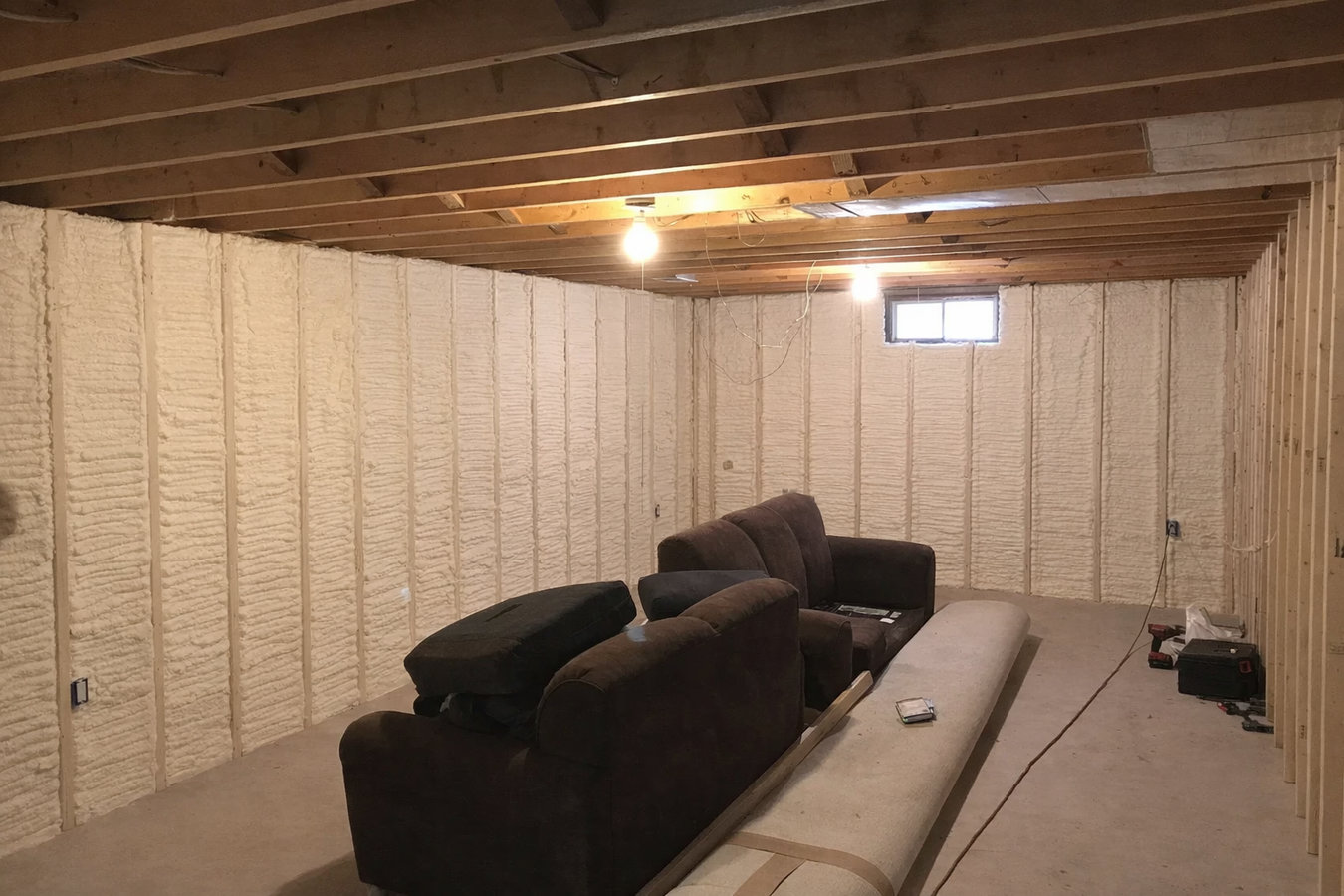
Cold floors above your basement, spiking summer cooling bills, and musty odors are all signs your basement is working against you. We fix that with proper insulation and air sealing.
Basement insulation in Opelika creates a thermal barrier between your basement and the living areas above it, most jobs are completed in one to two days with no need to leave your home. Without it, heat and moisture move freely between your basement and your floors, making the whole house harder to keep comfortable.
This is especially common in Opelika homes built in the 1950s through 1980s, where basement insulation was minimal or skipped entirely. If you're dealing with cold floors in winter or a basement that smells musty after rain, insulation and proper air sealing are usually the answer. Many homeowners pair this service with closed-cell foam insulation for maximum moisture resistance in Alabama's climate.
Opelika's clay-heavy soils hold water after heavy rain, which means basement moisture is a year-round concern here, not just a seasonal one. Getting it addressed now saves you from far more expensive problems down the road.
If the floors in rooms directly above your basement feel noticeably cooler than the rest of the house during Opelika winters, heat is escaping through an uninsulated basement ceiling. You shouldn't need extra socks in your own kitchen in January. This is one of the most common complaints before homeowners call us.
A persistent musty odor drifting up from the basement means moisture is collecting down there. In Opelika's humid climate, that's a year-round risk. Moisture and mold thrive in uninsulated basements because temperature differences create condensation. If you're noticing the smell, get it looked at before it becomes a bigger problem.
If your cooling costs jump every summer without a clear reason, an uninsulated basement could be part of the cause. Opelika summers are long and hot, and without a thermal barrier, your air conditioner fights heat entering from below as well as above. Month-to-month bill comparisons over a couple of years often reveal this pattern.
White, powdery residue on basement walls is called efflorescence, and it's a sign that water has been moving through the concrete or block. In Lee County's clay-heavy soil environment, this is common after wet seasons. It doesn't always mean a serious water problem, but it does mean moisture is present and needs to be evaluated before insulation goes in.
We install basement insulation on walls, ceilings, and rim joists - wherever the heat and moisture transfer is happening in your specific home. Our crew pairs every insulation job with proper air sealing, because insulating without sealing gaps first is like putting on a coat with holes in it. For homes where moisture control is a top priority, we often recommend closed-cell foam insulation because it blocks both air and moisture at the same time.
If your basement shares concerns with the crawl space below or the floors above, we can scope the full project together. Many Opelika homeowners also find it makes sense to address crawl space insulation at the same time, since both spaces are often connected and share the same moisture challenges in this climate.
Best for conditioned basements or finished spaces where you want walls to stay at room temperature year-round.
Ideal for any basement - the rim joist is one of the leakiest spots in the house and often gets skipped during original construction.
Suited for unconditioned basements where the goal is to keep the floors above comfortable rather than heating or cooling the basement itself.
Recommended for any basement project - sealing gaps around pipes, wires, and framing before insulation goes in delivers the best long-term results.
Opelika sits in Alabama's humid subtropical climate zone, with summers that regularly push into the mid-90s and humidity that never fully lets up. That combination means your basement is under constant pressure from moisture-laden air trying to work its way into your home. The clay-heavy soils in Lee County hold water after heavy rain rather than draining it away, which makes basement moisture intrusion more common here than in areas with sandier ground. Many homeowners in established Opelika neighborhoods near downtown and along older residential streets are living in homes where the original basement insulation was minimal by today's standards or was never installed at all.
We serve homeowners across the region, including Wetumpka and Phenix City, where the same clay soil conditions and older housing stock create the same basement challenges. If you bought an older home in the Auburn-Opelika area, there is a good chance the basement has never been properly insulated. An assessment takes less than an hour and gives you a clear picture of what your home actually needs.
We'll ask a few basic questions about your basement size, whether it's finished or unfinished, and any moisture concerns you've noticed. We reply within one business day to schedule your visit.
A contractor walks through your basement with you, checks the walls, ceiling, and any existing insulation, and flags moisture issues before they become a problem. You get a clear explanation of what we recommend and why - before any price comes up.
You receive a written estimate breaking down the work, the materials, and the total cost. This is the right time to ask about permits, timeline, and the finished result. We won't pressure you to sign on the spot.
Most Opelika basement jobs are done in one to two days. We seal gaps first, then install insulation. Before we leave, we walk you through the finished work so you can see exactly what was done.
Free estimate, no obligation. We reply within one business day.
(334) 704-8271Many homes in Opelika's established neighborhoods were built in the 1950s through 1980s with little or no basement insulation. We've worked in these homes and know what the construction patterns look like, what's typically missing, and what materials hold up in this climate.
We seal gaps around pipes, wires, and framing before insulation goes in, every time. That's the step that separates a job that performs from one that just looks done. Skipping it is one of the most common ways contractors cut corners on basement work.
Alabama's clay soils and humid summers make moisture the biggest risk for Opelika basements. We check for efflorescence, water staining, and drainage concerns during the assessment and flag them before insulation goes in - not after. The EPA recommends addressing moisture sources before installing insulation to prevent mold and structural damage.
You receive a written estimate before any work begins that breaks down exactly what will be done and what it will cost. No verbal quotes, no scope changes without your approval, no invoices that don't match what you agreed to.
Every basement insulation job we do is backed by a written estimate, a proper moisture assessment, and a final walkthrough before we leave your driveway. We work on homes throughout the Opelika area and understand the specific conditions that make basement insulation in this climate different from other parts of the country. Learn more about basement insulation standards at energy.gov.
The highest-performing insulation material for moisture-prone spaces - ideal for Opelika basements and crawl spaces that face year-round humidity pressure.
Learn MoreIf your home has a crawl space alongside or instead of a basement, we apply the same moisture-first approach to keep your floors and subfloor protected.
Learn MoreEvery summer you wait is another summer of higher energy bills and moisture risk. Call us today or request a free estimate online - we reply within one business day.